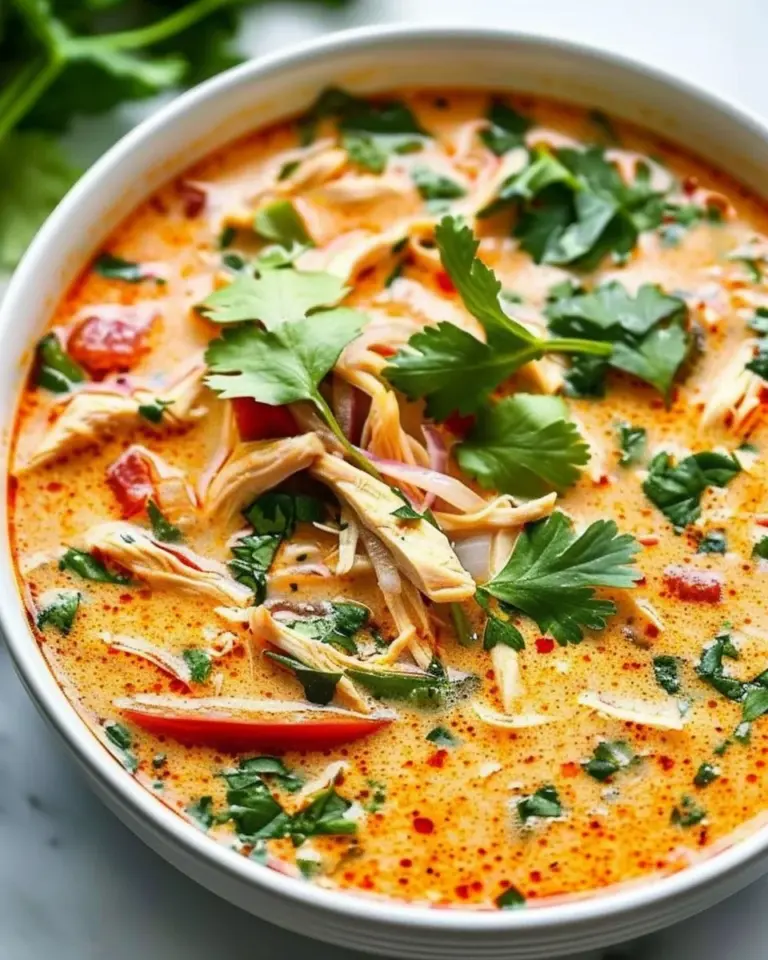
Chinese Chicken Noodle Soup
Imagine a steaming bowl of Chinese Chicken Noodle Soup—the kind that softly steams on a chilly evening, the aroma of fresh ginger and garlic lifting into the air, the warmth spreading through your chest with the first spoonful. This soup blends the comforting familiarity of tender shredded chicken and wheat noodles with the lively twist of Chinese aromatics and spices. Whether you’re feeling under the weather or simply craving something cozy and nourishing, this dish hits the spot every time.
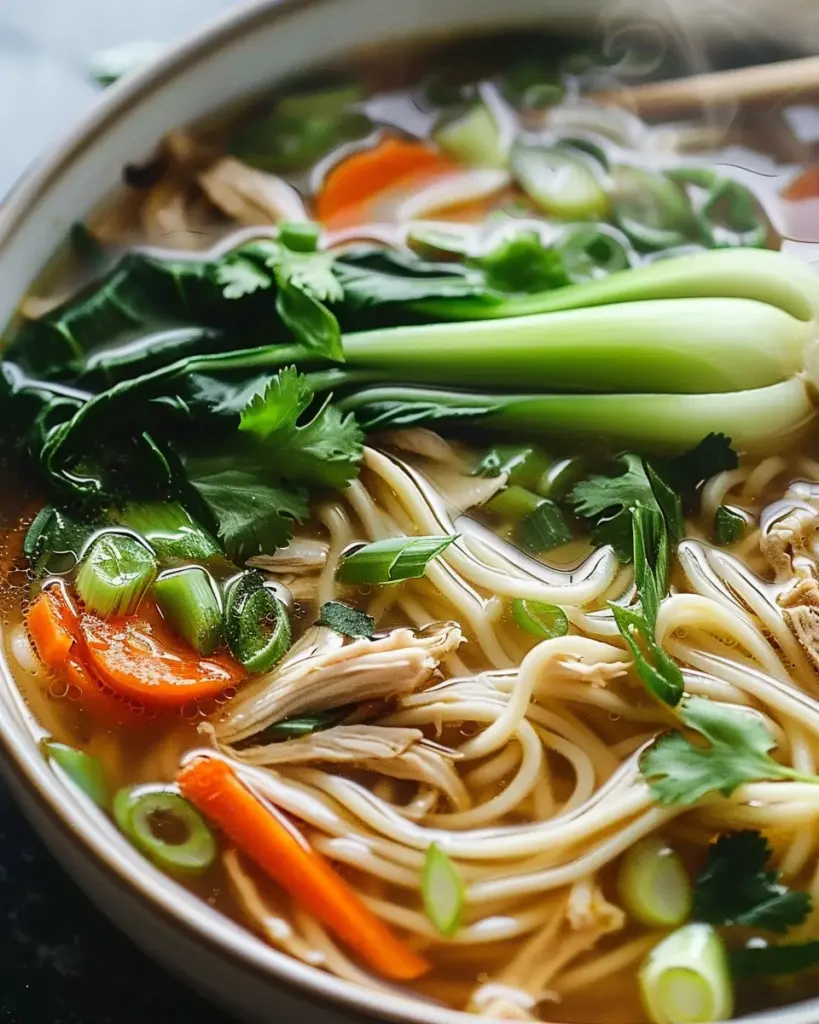
You’ll love this soup because:
- It uses everyday ingredients but delivers bold flavour thanks to the aromatics — ginger, garlic, scallion, cumin seeds and Sichuan peppercorns.
- It’s versatile – use bone‑in thighs for rich broth or shortcuts when you’re in a rush.
- It’s both a comfort meal and an elevated “just‑home‑cooked” dish that feels special.
- The noodle and broth combination ensures every bite is satisfying — texture from noodles, depth from broth, freshness from herbs.
Preparation Phase & Tools to Use
Essential Tools and Equipment
- A heavy‐bottomed soup pot or Dutch oven (e.g., 3.5‑quart/4‑quart size)
- A medium pot for cooking noodles (if you’re cooking noodles separately)
- Tongs (to remove chicken from broth)
- A fine mesh strainer/colander (to strain out solids from the broth)
- A pair of forks (to shred the chicken)
- Measuring spoons & cups for accurate seasoning
- A sharp knife and cutting board for slicing ginger, green onion and vegetables
- Bowls for serving
Importance of Each Tool
- Heavy‑bottomed pot ensures even heat, avoids burning the aromatics or chicken base.
- Separate noodle pot prevents the noodles from absorbing too much broth and diluting the flavour.
- Tongs make it easy and safe to remove the hot chicken after simmering.
- Fine mesh strainer helps remove ginger slices, garlic, cilantro stems, etc., giving you a clear, clean broth.
- Forks for shredding make the chicken fall apart into nice bite‑sized pieces for the soup.
- Measuring tools ensure your flavour balance is consistent — critical when using potent spices like Sichuan peppercorns.
- Knife & cutting board: prepping fresh aromatics (ginger, garlic) is key to the depth of flavour in the broth.
- Serving bowls: warming the bowls slightly helps keep the soup hot longer and makes the experience more comforting.
Preparation Tips
- Pat the chicken dry before browning — especially if using skin‑on thighs — this helps render some fat and browning flavour.
- Smash the garlic instead of fully mincing — this gives flavour without tiny bits floating in the broth if you’ll strain later.
- Slice the ginger fairly thick (about ¼‑inch) so you can remove it easily after simmering if you like a clean broth.
- Use bone‑in, skin‑on chicken thighs if possible — the bones and skin add richness to the broth.
- If you’re short on time, you can use boneless skinless chicken thighs or even leftover shredded chicken and skip some steps.
- Cook noodles separately if using dried noodles to avoid the broth becoming starchy or overly thick.
- Warm your serving bowls in hot water while you finish the soup — that little detail prolongs the warmth of your dish.
- Taste the broth before serving and adjust seasoning (soy sauce, salt) at the end — it’s easier to correct then.
List of Required Ingredients
Here’s a clear, organised ingredients list for 2 servings (adapt as needed):
Broth
- 1 teaspoon olive oil (or chicken fat)
- 2 pieces bone‑in, skin‑on chicken thighs (or boneless skinless thighs)
- 4 cloves garlic, smashed
- 1″ piece fresh ginger, sliced
- 1 green onion (scallion), halved
- ½ teaspoon cumin seeds
- ½ teaspoon Sichuan peppercorns (or black pepper as substitute)
- 1 teaspoon Shaoxing wine (or dry sherry)
- 4 cups (about 1 litre) chicken broth (or low‑sodium chicken broth)
- ½ bunch cilantro, including leaves and stems (about 1 cup packed)
- 1 bay leaf
Soup / Assembly
- ½ teaspoon soy sauce (or to taste)
- 3 oz dried noodles (or about 90‑100 g; if fresh noodles use ~4 oz/225 g)
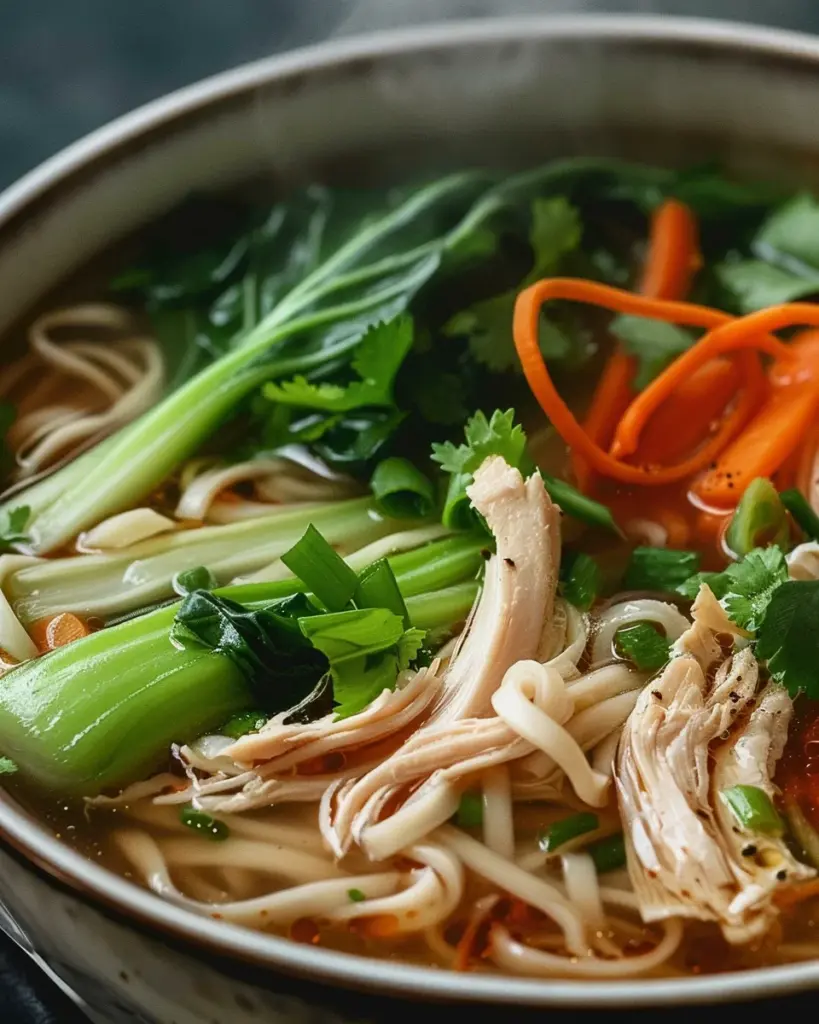
- 1 carrot, sliced
- 3 baby bok choy, each cut lengthwise into 2 pieces (6 pieces total)
- 2 tablespoons fresh cilantro, chopped (for garnish)
(*Note: adapt vegetables to preference — e.g., spinach or kale will also work.)
Step‑by‑Step Directions
Here’s a detailed full walkthrough of how to prepare the recipe. Where applicable I’ve included tips or variations.
- Heat the oil in the soup pot (medium heat) until it’s hot but not smoking.
- Add the chicken thighs, skin‑side down first if using skin‑on. Cook undisturbed ~1 minute (or until the underside turns light golden). This ensures good flavour from the browning.
- Flip the chicken thighs. Immediately add the smashed garlic, sliced ginger, halved green onion, cumin seeds and Sichuan peppercorns (or black pepper). Stir gently and cook ~1 minute, just until the spices become fragrant — don’t let them burn.
- Add the Shaoxing wine, pour it in to deglaze the pot slightly (scrape up any browned bits).
- Pour in the chicken broth, add the cilantro (leaves + stems) and bay leaf. Bring the mixture to a boil over medium‑high heat.
- Once boiling, reduce heat to a simmer, cover the pot, and cook ~20 minutes. This gives the chicken time to cook through and infuse the broth with flavour.
- Meanwhile, in a separate pot, cook the noodles according to package instructions (if using dried noodles). Make sure they are al dente, then drain and set aside. (Tip: rinse under hot water if the noodles are sticking.)
- After the 20 minutes, use tongs to remove the chicken thighs from the broth and transfer them to a plate. Let them rest briefly.
- Shred the chicken: remove and discard the skin (if using skin‑on). Use two forks to shred the meat into bite‑sized pieces.
- Strain the broth: Use a fine mesh strainer or colander to remove the garlic, ginger slices, green onion halves, cilantro stems and bay leaf. Return the clear broth to the pot. (This step is optional — if you like bits in your soup you can skip straining.)
- Back in the pot, add the soy sauce, taste the broth, and adjust seasoning as needed (add more if you like deeper savoury flavour).
- Raise the heat to medium‑high and bring the broth back to a boil. Add the sliced carrot and cook ~3 minutes. Then add the bok choy and cook ~1 minute (or until it reaches your desired texture).
- Add the shredded chicken back into the pot, stir to warm the chicken in the broth for ~30 seconds.
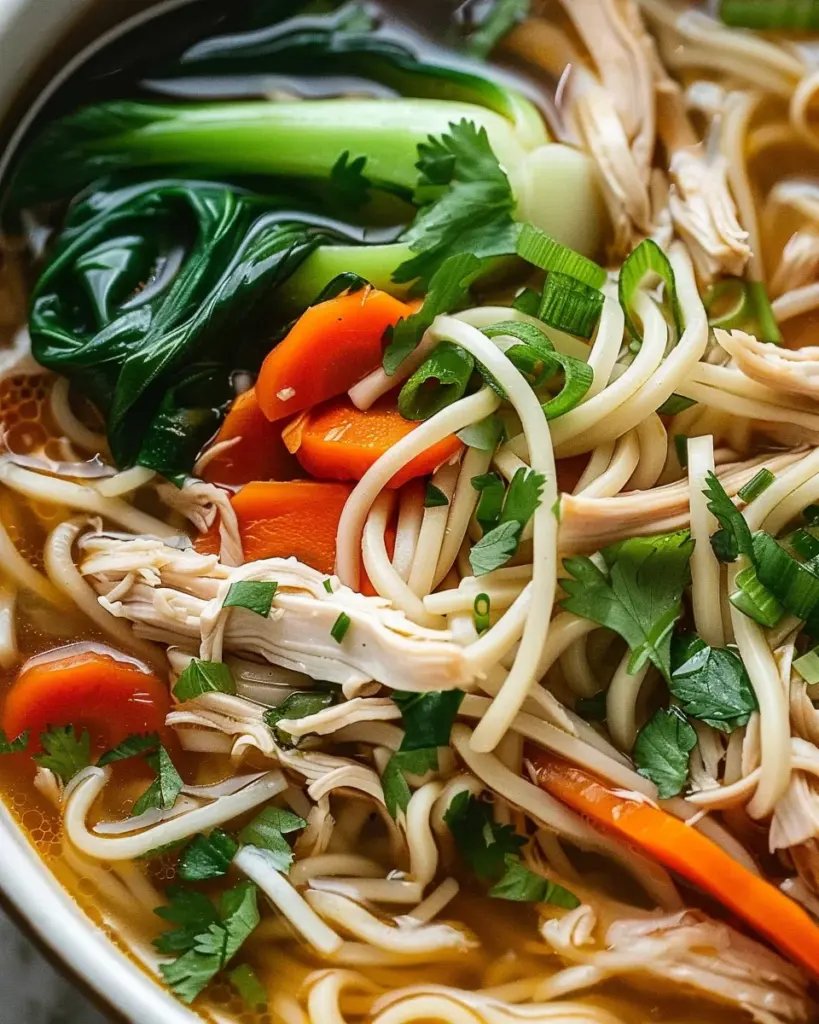
- To serve: Divide the cooked noodles between bowls. Ladle the hot broth with vegetables and chicken on top of the noodles. Garnish with the chopped fresh cilantro. Serve hot immediately.
- Optional variations/tips:
- If you’re short on time: Use boneless skinless chicken thighs or even 2 cups of shredded rotisserie chicken. Skip browning or reduce simmer time.
- If using fresh noodles (rather than dried) you may need a slightly larger quantity (about 4 oz/225 g) because they expand less.
- For extra heat or flavour: add a drizzle of chilli oil or a pinch of chilli flakes just before serving.
- Swap in different leafy greens like spinach, kale or choy sum if baby bok choy is unavailable.
Serving Suggestions
Here are some ways to serve your Chinese Chicken Noodle Soup to elevate the meal:
- Pre‑warm serving bowls so the soup stays hot longer.
- Place the cooked noodles in bowls first, then ladle the hot broth, vegetables, and shredded chicken on top.
- Garnish with fresh chopped cilantro (or green onion) just before serving for freshness.
- Offer optional condiments: chilli oil, broken‑roast garlic chips, pickled vegetables for extra flavour contrast.
- Serve immediately after assembly so the noodles stay distinct and don’t soak too long.
Common Mistakes To Avoid & How to Perfect the Recipe
- Over‑cooking the noodles: If you cook the noodles too long (or in the soup broth), they may become mushy or soak up too much liquid. Cook separately and add at the end.
- Insufficient flavour in the broth: Make sure you brown the chicken and aromatics (garlic, ginger, cumin, peppercorns) at the start to release full flavour.
- Skipping seasoning at the end: Broth can taste bland if you don’t adjust seasoning (soy sauce, salt) after straining. Taste before you serve.
- Adding greens/veg too early: Vegetables like bok choy should be added near the end so they remain crisp and bright green, not over‑soft.
- Using wrong noodles: If you use fresh noodles in place of dried, you’ll need more quantity because fresh expand less. (The note in the recipe mentions ~4 oz/225 g if fresh).
- Serving in cold bowls: That quickly cools the soup. Pre‑warm bowls with hot water then drain before serving.
- Neglecting garnish: A fresh herb or a little chilli oil adds that finishing touch of freshness and contrast.
By minding these common pitfalls and applying the tips above, your soup will come together clean, flavourful, and texturally balanced.
Side Dish Recommendations
Here are 8 side‑dishes that pair beautifully with your soup, adding variety in texture and complementary flavour.
1. Spicy Cucumber Salad
A cold, refreshing side‐salad with crisp cucumber, garlic, chilli, sesame oil and a touch of vinegar. Its cool crunch contrasts nicely with the warm broth.
2. Steamed or Sautéed Bok Choy (or Chinese Broccoli)
Since your soup already includes bok choy, a separate small plate of greens with garlic and light soy is a great companion. Crisp, bright greens enhance the meal.
3. Crispy Gyoza / Dumplings
Lightly fried or steamed dumplings make a fun side – chewy wrapper, savoury filling, dipping sauce brings extra flavour.
4. Pickled Vegetables / Kimchi‑Style
Something slightly sour or pickled cuts through the richness of the broth, and refreshes the palate between spoonfuls.
5. Sesame Noodles or Cold Noodle Salad
Serve a small portion of cold sesame‑sauce noodles alongside the hot soup — contrast in temperature and texture makes it exciting.
6. Scallion Pancakes
Flaky, crispy pancake to break off pieces and dunk in the broth or eat alongside — adds a satisfying chew.
7. Steamed Edamame with Sea Salt
A simple, healthy green‑protein side which keeps things light and doesn’t compete with flavour intensity.
8. Chilli Oil & Garlic Mushrooms
Earthy mushrooms sautéed with garlic and finished with a drizzle of chilli oil. Bold but still harmonious with the soup.
Recipe Tips
- Use fresh aromatics (ginger, garlic, green onion) and toast the spices (cumin, Sichuan peppercorns) early so the flavours bloom.
- When browning the chicken thighs (if using bone‑in, skin‑on), pat them dry to promote good Maillard browning — this adds depth to the broth.
- Simmer gently rather than aggressively once you add the broth; this preserves clarity and avoids toughening the shredded chicken.
- Cook the noodles separately from the broth, or add them at the very end. This prevents the noodles from becoming mushy or absorbing too much liquid.
- Taste the broth just before serving and adjust seasoning (soy sauce, salt). The flavours intensify during simmering and you may need less than you anticipate.
- Garnish fresh herbs (cilantro) just before serving so the green colour and fragrance remain bright.
- If you like heat or extra zest, add a drizzle of chilli oil or a small pinch of chilli flakes at the table.
- Leftovers? Store the broth separate from the noodles when possible (see Storage & Reheating below).
Storage Instructions
- Allow the soup to cool quickly before refrigeration — transferring into smaller containers or placing the pot in an ice‑water bath helps achieve safe cooling.
- For refrigerator storage: keep the soup in an airtight container at 4 °C (40 °F) or below. Clear‑based soups like this one typically remain safe for 3 to 5 days.
- If you plan to freeze: It’s best to freeze the broth (with chicken and vegetables) without the noodles, because noodles may become overly soft or mushy after thawing.
- Freeze in airtight, freezer‑safe containers or bags; leave some head‑space for expansion. Label with date.
Reheating Instructions
- Stovetop method (recommended): Transfer soup to a cold pot, then heat over medium heat, stirring occasionally until it reaches a boil or an internal temperature of 165 °F (about 74 °C) to ensure safety. Add cooked or new noodles just before serving.
- Microwave method (for single portions): Place the soup in a microwave‑safe bowl, cover, and heat for 1 minute. Then in 30‑second increments, stirring between each, until hot throughout. Add noodles at the end to avoid sogginess.
- If reheating from frozen: thaw in the refrigerator overnight or place sealed container in warm water. Then reheat on stovetop or microwave. If you find the broth has thickened, add a splash of chicken broth or water to restore the consistency.
- Avoid reheating more than once; take out only the amount you’ll consume to maintain food safety and quality.
Frequently Asked Questions (FAQs)
Q: How long will this soup keep in the fridge?
A: When properly cooled and stored in an airtight container at ≤ 4 °C, you can keep the soup for about 3–5 days. The broth‑based soup with chicken is on the longer end. If it smells or looks off, discard it.
Q: Can I freeze the soup with the noodles in it?
A: Technically yes, but for best texture you should freeze the broth (with chicken & vegetables) and add freshly cooked noodles when reheating. Frozen noodles tend to become very soft or mushy.
Q: How long can I keep the soup in the freezer?
A: If stored properly in a freezer‑safe container, you can keep the broth for up to 3–4 months, though flavour and texture may gradually decline.
Q: Can I reheat the soup from frozen without thawing?
A: Yes — you can place the sealed container or freezer bag into warm water to partially thaw, then heat on the stovetop over medium heat, stirring to break up frozen clumps. Add cooked noodles near the end.
Q: What do I do if my soup tastes bland after reheating?
A: Give it a taste and adjust the seasoning with a bit more soy sauce, a squeeze of fresh lime/lemon, or some chilli oil for kick. Fresh herbs added at the end can also brighten the flavour significantly.
Q: Can I substitute different vegetables or noodles?
A: Absolutely. You can use fresh noodles (~4 oz/225 g) instead of dried, or swap baby bok choy with spinach, choy sum, or kale. Just adjust cooking time for the greens accordingly. The noodles and greens change texture, so keep an eye on them. (See substitution note in the recipe.)